
Blog
Waterproof Case Vs Water-Resistant Case: What’s the Real Difference?
Aug
In today’s fast-paced digital world, smartphones have become essential tools for communication, entertainment, work, and much more. These devices keep us connected to everything around us, from social media and emails to photos and apps. As such, our smartphones are crucial to our everyday lives, and keeping them in top condition is a priority.
One of the biggest threats to your smartphone’s longevity is water damage. Whether it’s a sudden downpour, an accidental drop into the pool, or a spill from a coffee cup, water damage can render your phone useless. That’s where phone cases come in, offering varying degrees of protection. However, confusion often arises when it comes to understanding the difference between “waterproof” and “water-resistant” phone cases.
Are they the same thing? Can you drop your phone in the pool with a water-resistant case, or do you need a waterproof case for that? In this article, we’ll break down the differences between waterproof and water-resistant phone cases, explain the significance of IP ratings, and help you make an informed decision about which type of case will best protect your phone.
What is a Water-Resistant Phone Case?
A water-resistant phone case is designed to protect your device from light exposure to water. This can include splashes, light rain, or accidental spills. However, water-resistant cases are not intended for full submersion in water.
How It Works:
Water-resistant phone cases are built with sealed edges and protective layers that reduce the likelihood of water entering the case under normal circumstances. These cases will shield your phone against everyday water encounters, such as getting caught in a drizzle or sweating while working out, but they’re not meant to protect against deeper or prolonged exposure to water.
IP Ratings for Water-Resistant Cases:
Water-resistant cases are typically rated with IP (Ingress Protection) ratings, which indicate their ability to resist water and dust intrusion. The IP rating system consists of two digits: the first digit refers to dust protection, and the second digit relates to water resistance.
For example:
IPX4 – This rating signifies that the case is protected against water splashes from any direction. It’s a good fit for light rain or sweat exposure.
IPX7 – This rating means the case can withstand immersion in water up to 1 meter deep for up to 30 minutes. This provides moderate protection and is useful if you’re caught in heavy rain or accidentally drop your phone into a shallow puddle.
When to Use It:
A water-resistant case is ideal for everyday situations where your phone may encounter light water exposure. For instance:
Walking through light rain
Sitting by the pool (but not dropping your phone in)
Spilling a drink on your phone
Exercising and sweating near your phone
It’s important to note that water-resistant cases should never be used for submerging your phone. They offer light protection and will not withstand prolonged exposure to water.
Benefits of Water-Resistant Cases:
Compact and Lightweight: These cases are typically thinner and don’t add significant bulk to your phone, maintaining its slim profile.
Affordable: Water-resistant cases are generally less expensive than waterproof options, making them ideal for budget-conscious users.
Basic Protection: Water-resistant cases offer peace of mind for light, everyday exposure to water but will not provide protection in extreme conditions.
What is a Waterproof Phone Case?
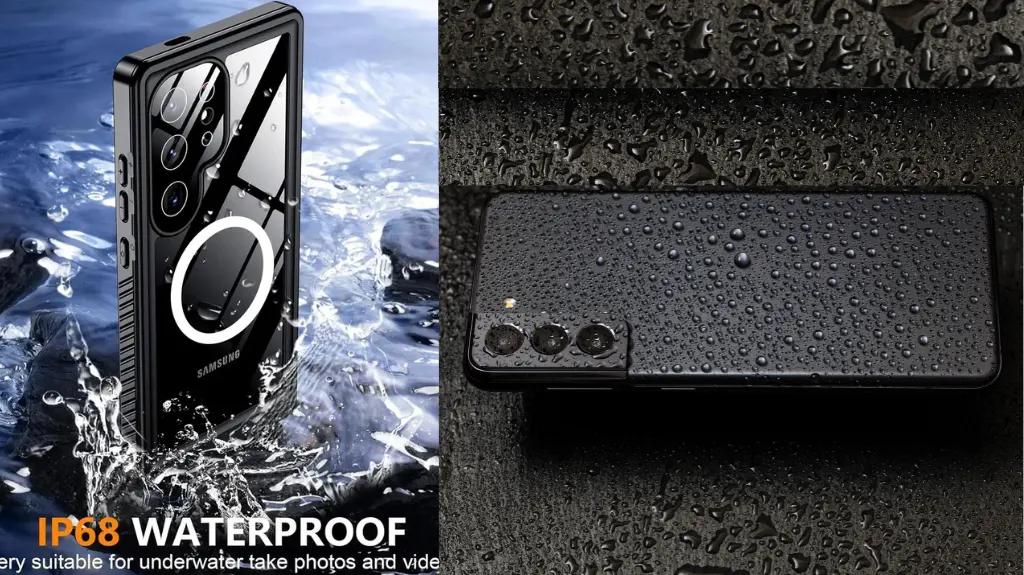
Waterproof phone cases are designed to offer a higher level of protection than their water-resistant counterparts. They are made to protect your phone from full submersion in water, meaning you can safely drop your device in the pool, take it underwater for photography, or engage in water sports without worrying about water damage.
How It Works:
Waterproof phone cases are built with reinforced seals, airtight construction, and pressure-tested designs to prevent water from entering the case. Whether your phone is exposed to heavy rain, submerged under several feet of water, or even dropped in saltwater, waterproof cases will keep your device safe.
IP Ratings for Waterproof Cases:
Waterproof cases typically have higher IP ratings than water-resistant cases. These higher ratings indicate that the case can handle deeper water immersion without compromising its protection. Some common ratings for waterproof cases include:
IP67 – This rating means the case can withstand immersion in water up to 1 meter deep for 30 minutes.
IP68 – Cases with this rating can endure submersion in water beyond 1 meter (usually up to 1.5 meters) for up to 30 minutes or more. This is the standard rating for most high-quality waterproof cases and provides reliable protection in both fresh and saltwater.
IP69K – This rating is for extreme conditions, where the case is not only waterproof but also able to withstand high-pressure water jets and high temperatures. While this rating is more common in industrial settings, certain rugged phone cases may feature it.
When to Use It:
Waterproof cases are the go-to choice for people who:
Engage in water sports like swimming, surfing, or kayaking
Need to protect their phone from prolonged water exposure during outdoor adventures
Travel to places where there’s a high risk of phone submersion (such as around pools, beaches, or during water-related activities)
Are looking for full immersion protection, such as underwater photography or diving
Benefits of Waterproof Cases:
Full Submersion Protection: These cases are designed to protect your phone even when fully submerged, making them ideal for swimming, kayaking, or underwater photography.
Durability: Waterproof cases are often made with rugged, long-lasting materials, which provide extra protection against drops, shocks, and scratches, in addition to water.
Peace of Mind: With a waterproof case, you don’t have to worry about accidental submersion. Whether you’re hiking in the rain or dropping your phone in the pool, a waterproof case will ensure your phone stays safe.
Comparing Water-Resistant vs Waterproof Phone Cases
| Feature | Water-Resistant Case | Waterproof Case |
|---|---|---|
| Protection Level | Protects against minor splashes or rain. | Protects against full submersion in water. |
| IP Rating | Typically IPX4 to IPX7. | Typically IPX8 or higher. |
| Best for | Light rain, spills, sweat, beach trips. | Swimming, snorkeling, heavy rain, outdoor activities. |
| Durability | May wear out over time with prolonged exposure. | Often more durable and long-lasting. |
| Price | Generally more affordable. | Tends to be more expensive due to higher protection. |
| Bulkiness | Usually lightweight and slim. | Often bulkier to ensure water-tight seals. |
Understanding IP Ratings in Detail
The IP rating system is essential for understanding how well a case protects against water and dust. Let’s break down some common ratings:
IPX0 to IPX3: These cases offer minimal water protection and generally won’t protect against significant liquid exposure.
IPX4: Protects against water splashes from any direction, ideal for exposure to light rain or sweat.
IPX7: Can withstand immersion in water up to 1 meter for 30 minutes. A good choice for light water exposure or shallow submersion.
IPX8: Offers protection beyond 1 meter (up to 1.5 meters or more), making it suitable for swimming or underwater activities.
IP69K: Designed for industrial use, these cases can withstand high-pressure water jets and high temperatures, providing protection in the harshest environments.
When to Use Each Type of Case:
Water-Resistant Cases:
Best for daily exposure to water: If you’re walking in the rain, at the beach, or carrying your phone around the pool, a water-resistant case will provide the protection you need.
For those who don’t submerge their phones: If you don’t plan to drop your phone in the pool but want protection against accidental splashes, go with a water-resistant case.
Waterproof Cases:
For swimmers, divers, and adventurers: If you’re going on water sports adventures like swimming, kayaking, or scuba diving, a waterproof case is a must-have.
For extreme outdoor conditions: Waterproof cases are ideal for people who need extra protection against heavy rain, snow, or deep water exposure.
Conclusion
Choosing between a water-resistant and a waterproof phone case ultimately depends on how you use your phone and the level of protection you need. If you’re simply looking for basic protection against accidental splashes, rain, or spills, a water-resistant case should do the job. These cases are affordable, lightweight, and offer solid protection in everyday situations.
However, if you need peace of mind knowing your phone will be safe even if submerged in water, or if you’re regularly engaging in water sports or harsh conditions, a waterproof case is your best option. Waterproof cases provide superior protection, ensuring your phone stays safe during extended water exposure.
At Coralcase.ca, we offer a variety of waterproof and water-resistant cases to suit your needs. Whether you’re looking for light protection for everyday use or a durable case for extreme conditions, we’ve got you covered. Choose the right case today and keep your smartphone safe, no matter the situation.